
I was standing in a coffee queue in one of the lovely coffee trucks in Cirencester recently when a slightly varied chain of events unfolded.
My Cockapoo decided that the cyclist locking up his bike was definitely her new best friend. The cyclist laughed. I apologised profusely (although he didn’t mind). The lady behind me sighed dramatically because her cappuccino was apparently now 17 seconds later than expected. Meanwhile, the barista remained calm, smiled, reassured everyone and carried on making coffee for the ever-growing queue of people as though this happened every Friday.
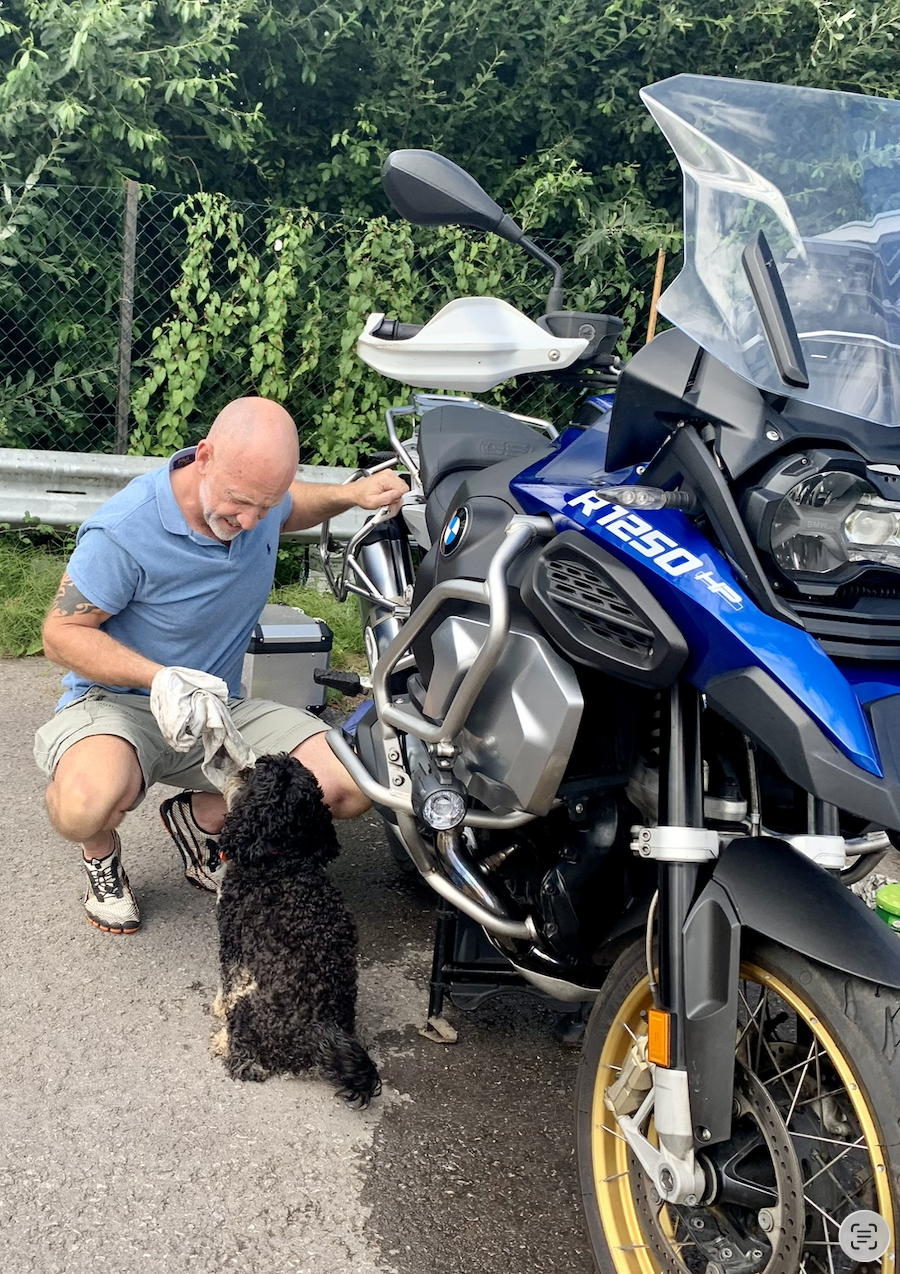
(*Note: the pic is of our dog pestering my husband, which she always does when he’s near his motorbike. She has a strange obsession with motorbikes!! …and, of course, I didn’t take a pic of her and the cyclist!)
It struck me that we’d just experienced four completely different responses to the same situation.
Our dog, of course, was having the best day of her life!
When I got back to work, it made me smile because this is exactly what happens in the workplace.
The same situation. Four different reactions.
Have you ever noticed how one announcement can produce completely different responses?
“There’s a change to the project…”
- One person gets excited
- Another immediately starts asking questions
- Someone else quietly wonders how it will affect the team
- Another is already halfway through updating the spreadsheet.
None of them are wrong.
They’re simply wired differently.
As managers, it’s easy to assume that people think the way we do. In reality, they rarely do.
“Why don’t they just…”
I have heard the below many times from managers who tell me things like:
- “Why don’t they just get on with it?”
- “Why do they need so much reassurance?”
- “Why do they ask so many questions?”
- “Why are they always changing the plan?”
The answer is usually surprisingly simple.
- Different personalities have different priorities
- Some people are motivated by results
- Some by relationships
- Some by stability
- Some by accuracy.
Once you recognise this, conversations become much easier.
This is where DISC becomes fascinating.
DISC isn’t about putting people into little boxes.
It’s about giving us a practical language to understand why people behave the way they do.
Instead of thinking: “They’re being difficult.”
You begin wondering: “I wonder what’s important to them?”
The benefits…
- That tiny shift changes everything
- Feedback lands better
- Meetings become more productive
- Conflict reduces
- People feel understood.
And managers spend far less time wondering why perfectly sensible conversations somehow turned into misunderstandings.
The best managers become behavioural detectives
One of the great ‘aha’ moments during our management programmes is when someone suddenly says:
“I’ve just realised…that’s exactly why my team member reacts like that!”
It’s like watching a light switch flick on.
Nothing about the employee has changed.
The manager has simply changed the way they see them.
And that changes the conversation.
Leadership isn’t about changing people
It’s about adapting your own approach.
Great managers don’t use one communication style.
- They flex
- Sometimes people need challenge
- Sometimes they need encouragement
- Sometimes they need facts
- Sometimes they simply need to know you’ve listened.
The best leaders know which version of themselves their team needs that day.
Back to the coffee queue…
- Our Cockapoo moved on.
- The cyclist got his coffee.
- The lady behind me survived the extra few seconds.
- The barista probably dealt with another dozen mini dramas before lunchtime.
Everyone left happy -> Same situation -> Different personalities -> Different reactions.
Exactly like work!
Perhaps leadership is less about having all the answers and more about understanding the people standing in front of us.
If you’d like to understand your own leadership style, or why some conversations seem effortless while others feel like hard work, we’d love to help.
At Athena Evolve, we use DISC behavioural profiling alongside practical management development to help managers build stronger relationships, communicate more effectively and lead with confidence.
After all, managing people would be easy… if they were all Cockapoos. They’d lap everything up, love every moment in life, and think that every person is their friend!! You’ve got to love them!
Sadly (or perhaps thankfully), they’re not.